The Paperwork
Nobody works a race meeting without a licence. Owners, trainers, drivers, grooms and officials are each licensed by the racing commission of the state where the meeting is held, and the licence is what admits a person to the stable area in the first place, before any question of entering a horse arises at all.
The track itself is not the licensing body. It distributes the forms and its racing office handles the paperwork, but the authority sits with the state. At Plainridge that meant the Massachusetts racing authority, and the application forms the office itself published are the source for every category set out below.
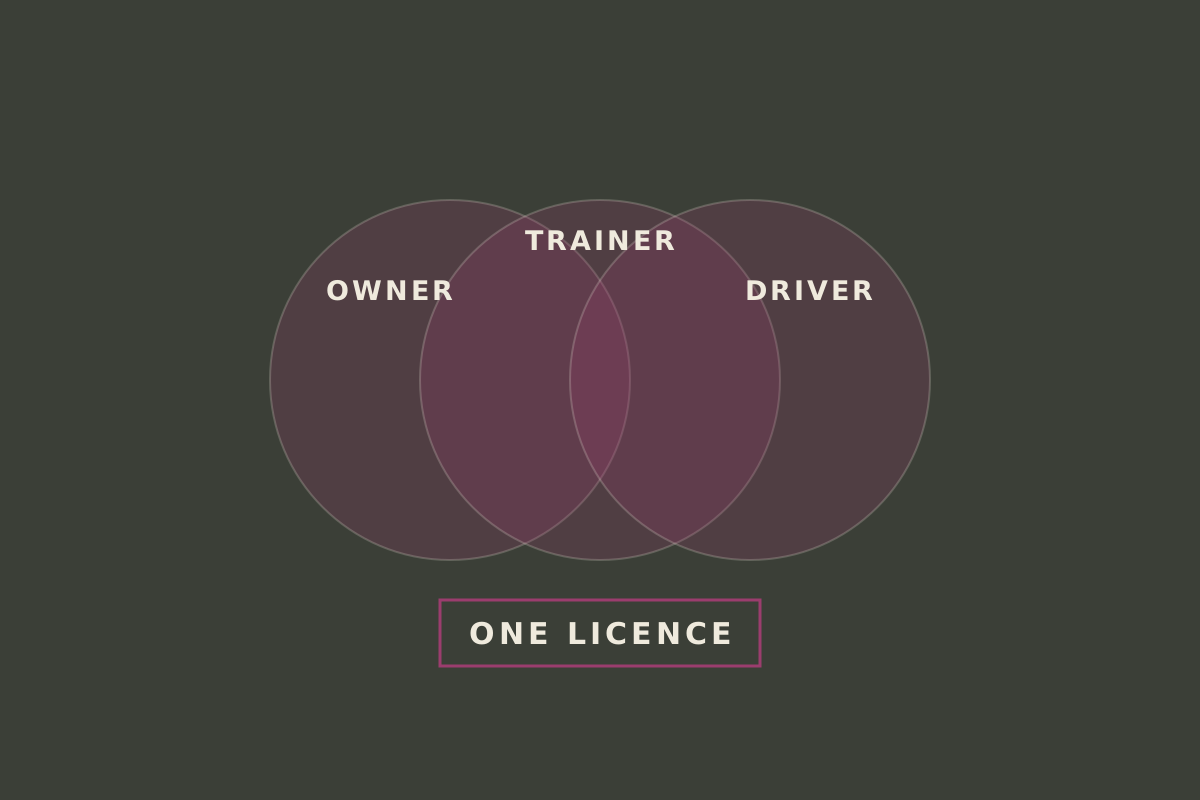
What the list shows is how much the roles overlap. A single combined application covers owner, trainer and driver, because at a meeting of this size one person very often held two of the three roles, and a working horseman not infrequently held all three of the roles at once.
The Licence Categories
The combined application covering the three participant roles. A single person frequently held two of them, and at a regional meeting often all three.
The stable-employee licence. Anyone working with horses in the barn area needed one, which made it the most widely issued category at any meeting.
For judges, the starter, the paddock judge and the rest of the officiating staff, who are licensed separately from participants.
Registration of a stable or partnership name under which horses are raced, so that the entity rather than an individual appears as owner.
A short-term authorisation, typically covering an ownership change between meetings or pending a full application.
Why It Shows Up in the Form
Licensing explains something visible in every chart on this site. When the same name appears as both driver and trainer, that is a single licence-holder appearing in two roles rather than a printing error, and it is the ordinary shape of a regional stable rather than any kind of oddity.
It also explains the stable names. Where a programme lists an owner that reads like a company rather than a person, a stable-name registration sits behind it, recording on paper exactly who it is that stands behind it. The trainer records show how these arrangements actually ran from one season to the next.
Current requirements are not reproduced here. Fees, forms and conditions are set by the state racing commission and change from season to season, so the only reliable source for a licence today is the relevant commission itself, and nothing set out on this page should be read as current guidance.
Reading the Categories as a Set
Five categories cover the whole of the meeting, which is fewer than the range of jobs on a racetrack suggests. The combined owner-trainer-driver application does most of the work, the groom licence covers everyone employed in the barn, and the remaining three handle officials, stable names and ownership caught mid-transfer.
What survives here is the form and not the roll. The racing office published what a person had to apply for, but it did not publish who held which licence in any given season, so this page describes the categories that existed rather than naming anybody who was actually licensed under them.
The temporary owner category is the most revealing of the five. Horses change hands between meetings and a claim can settle inside a single afternoon, so a short-term authorisation had to exist to keep a horse eligible while the full application worked its way through the state authority's own paperwork.
Licensing Questions
Who needs a licence to take part in harness racing?
Everyone with a role in the racing: owners, trainers, drivers, grooms and officials. Licensing is handled by the racing commission of the state in which the meeting is held rather than by the track, and holding one is a condition of entering the stable area at all, let alone of entering a horse.
Who licensed participants at Plainridge?
The Massachusetts state racing authority, as the licensing body for racing held in the commonwealth. The track distributed the application forms and its racing office handled the paperwork day to day, but the licence itself was always issued by the state authority rather than by the track.
Can one person hold several licences?
Yes, and it is normal. The combined owner-trainer-driver application exists precisely because those roles overlap so often. At a regional meeting the trainer holding the lines behind their own horse is very much the ordinary case rather than any kind of exception worth remarking upon.
What is a stable name registration for?
It lets horses be raced under the name of a stable or partnership rather than under an individual's name. The registration records exactly who stands behind that name, so ownership stays fully traceable on paper even while the programme itself prints only the stable name.
Do grooms really need a licence?
Yes. Anyone working with the horses in the stable area is licensed, which is a condition of any access to the backstretch at all. It is comfortably the highest-volume licence category issued at any meeting anywhere, by a very wide margin.
Are current licence forms available here?
No. This page records the categories the racing office issued during the era this archive covers. Current requirements, fees and forms all come from the relevant state racing commission instead, and every one of them can change from one season to the next.