
The Document
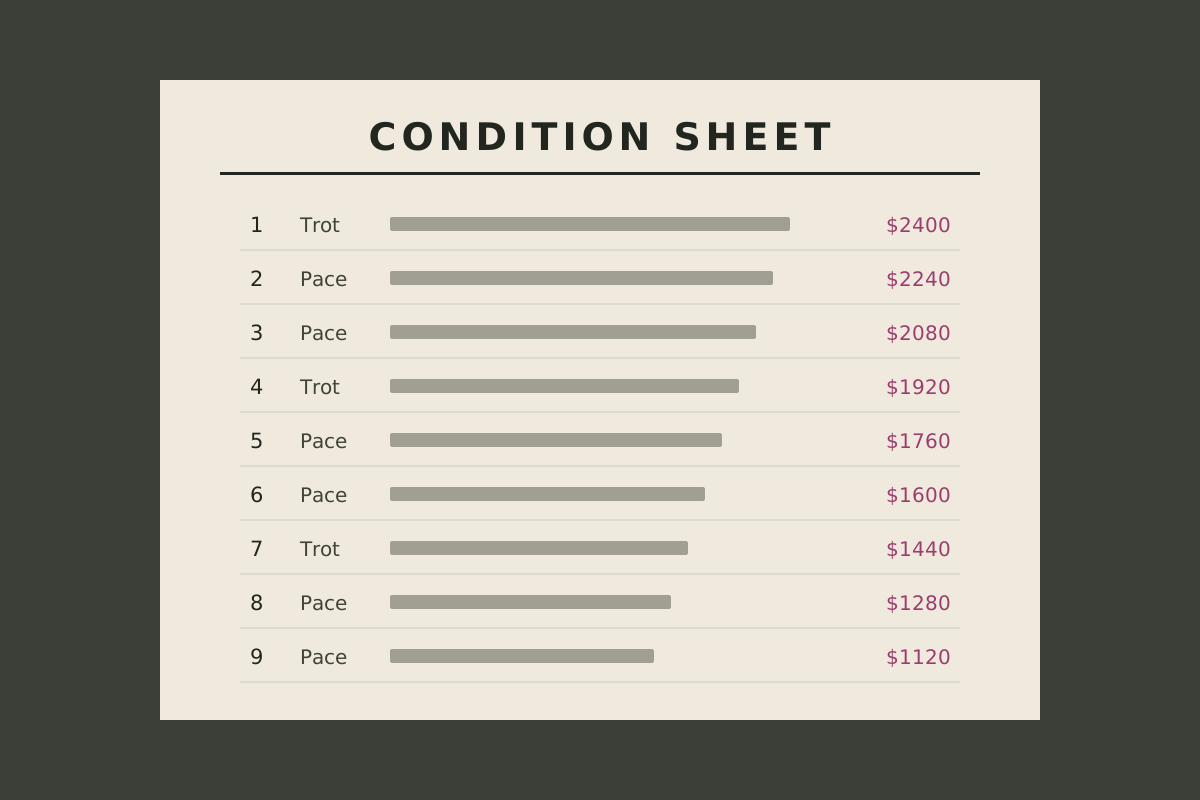
Before entries could be taken the racing office had to say what it was offering. That is the condition sheet: a numbered list of events for an upcoming program, each carrying a gait, a written eligibility condition and a purse, together with the deadline by which a horse had to be declared in to race.
It is the least glamorous document in racing and the most revealing. The entry sheet shows which horses actually turned up, while the condition sheet shows what the racing office had hoped to fill. Where an event on the sheet never appears on a card at all, it simply failed to attract enough entries.
The conditions are written out in full here rather than compressed into codes, which makes them the best available key to the shorthand used elsewhere. A sheet reading "Non Winners $250 Per Start in 2003 or Last 5 Starts" is precisely the same rule that the program itself prints as the code NW250PS.
A Sheet in Full
This is the program advertised for Tuesday, November 15, 2005, exactly as the office wrote it. Note in particular the allowance lines marked AE, meaning also eligible, which open up a second route into the very same race for horses that miss the primary condition by some margin but are still wanted in the field.
| Event | Gait | Condition | Purse |
|---|---|---|---|
| 1 | Pace | Fillies & Mares - Not Posted Open | $4,000 |
| 2 | Pace | Fillies & Mares - Claiming Price | $5,000 |
| 3 | Pace | Fillies & Mares - Claiming Price | $3,000 |
| 5 | Pace | Fillies & Mares - Non Winners | $200 |
Dated Sheets in the Record
A single sheet often advertised two or three programs at once, so the dates below are the individual programs rather than the files they came from. Each one links through to the race day on which that program was carded, in the cases where the card itself has survived in this record.
- Nov 15, 2005 (4)
- Nov 14, 2005 (5)
- Nov 10, 2005 (5)
- Nov 1, 2005 (4)
- Oct 31, 2005 (9)
- Oct 27, 2005 (5)
- Oct 20, 2005 (5)
- Oct 17, 2005 (8)
- Oct 13, 2005 (2)
- Jul 28, 2005 (3)
- Jul 26, 2005 (4)
- Jul 25, 2005 (5)
- May 19, 2005 (6)
- May 17, 2005 (5)
- May 16, 2005 (3)
- Apr 7, 2005 (3)
- Apr 5, 2005 (2)
- Apr 4, 2005 (2)
- Oct 26, 2004 (8)
- Oct 19, 2004 (12)
- Oct 18, 2004 (4)
- Oct 16, 2004 (3)
- Oct 12, 2004 (12)
- Oct 11, 2004 (7)
- Oct 9, 2004 (3)
- Oct 5, 2004 (7)
- Oct 2, 2004 (2)
- Sep 28, 2004 (3)
- Sep 25, 2004 (2)
- Sep 21, 2004 (6)
- Sep 20, 2004 (1)
- Sep 18, 2004 (1)
- Sep 14, 2004 (4)
- Sep 13, 2004 (1)
- Sep 6, 2004 (3)
- Sep 5, 2004 (1)
- Sep 4, 2004 (1)
- Aug 17, 2004 (6)
- Aug 16, 2004 (9)
- Aug 14, 2004 (6)
Reading the Sheets as a Set
The money is the quickest way to read a sheet. Across the 1,419 advertised events the purses run from $200 to $50,000, at a median of $3,200. One sheet therefore spans the whole working range of the meeting, from its cheapest conditioned race up to the days it was paying real money.
Two gaits, unevenly. 1,117 of the advertised events were pacing races against 302 for trotters, close to four to one. That imbalance runs through everything else in this record, from the class codes to the track records, and it is the first thing to account for when comparing any two times.
175 of the events carry an also-eligible line. That is the racing office keeping a second route open: a looser condition attached to the same race so a field can still be filled when the primary condition draws too few horses. It is written in before anyone knows whether it will be needed.
The sheets outlast the cards. For 89 of the 169 dated programs a race day page survives to link to, and for the other 80 the sheet is the only surviving statement that the program was ever offered. A median sheet advertises nine events, and the largest of them reaches sixteen.
Questions about the condition sheets
What is a condition sheet?
The sheet the racing office published ahead of a meeting, setting out what each race on the coming card would be: the gait, the condition a horse had to meet to be eligible, and the purse on offer. It is written before anyone has entered, so it states intent rather than outcome.
How many condition sheets survive?
169, covering 1,419 advertised events across 3 seasons — 2003 to 2005.
Is a condition sheet the same as the entries?
No. The sheet says what races will be offered; the entry sheet, printed later, says which horses were drawn into them. A condition on the sheet can end up with no takers and never appear on the card at all.
Why do the purses differ so much between events?
Because purse tracks the condition. A low claiming event and a stakes race are different propositions, and the money on offer is the clearest signal of where an event sat on the card.
Can I see the race that came from a given sheet?
Where the card for that date also survives, the date links through to it. Where it does not, the sheet stands on its own as the only surviving statement of what was planned.