The Circuit
The harness racing tracks in north america run as a scatter of regional meetings rather than one circuit. A handful carry most of the betting money; the rest race a seasonal meeting for a local colony of horsemen, and that second category is the one Plainridge itself belonged to for the whole of the era this record covers.
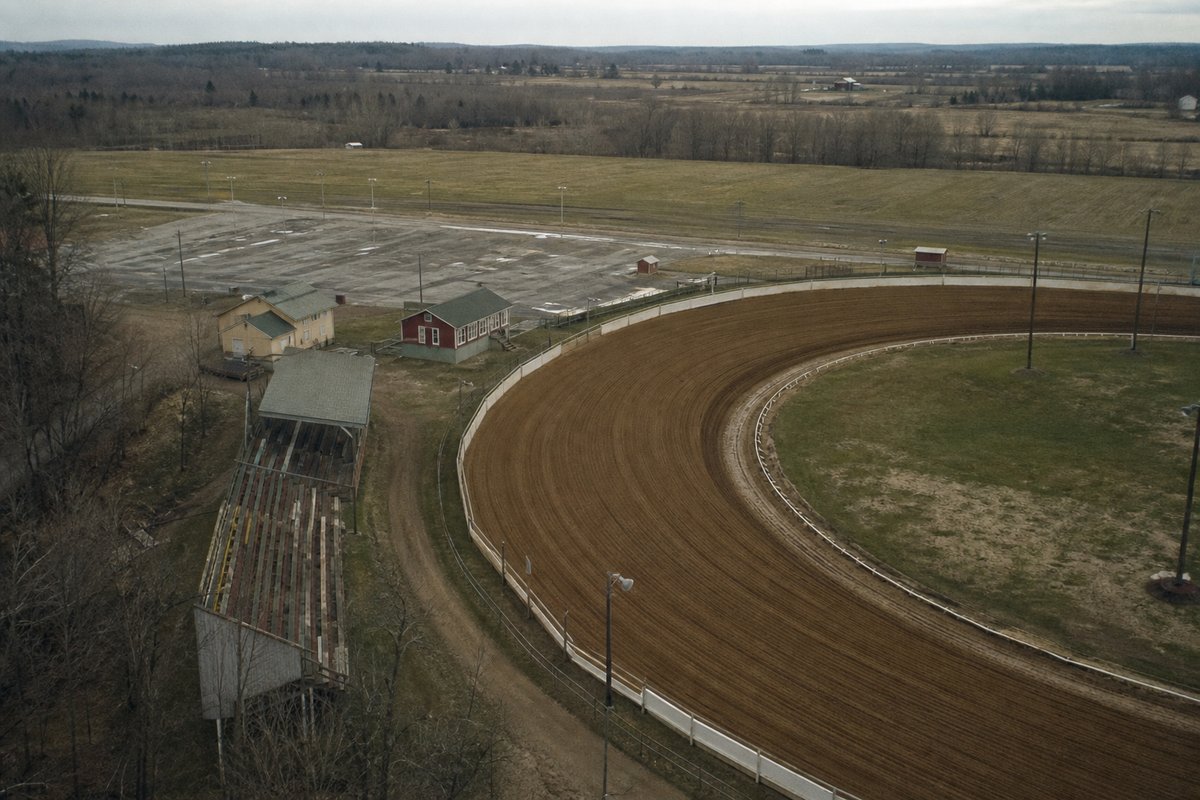
The first thing to know about any of these standardbred racing tracks is the size of the oval, because it changes the racing more than anything else. A mile covers the full distance whatever the circumference, so a short track turns more often. 6 of the venues below are half-mile ovals, and the difference shows in the times.
On a half-mile track a mile means four turns, on five-eighths also four, and on a mile oval only two. Every turn costs momentum and raises the value of an inside draw. It is why a time set at one track cannot be read straight across to another without allowance.
The Harness Racing Tracks of North America
A schedule, purse levels and ownership all change from year to year, so no schedule is stated here. What is listed instead is location and the shape of the oval, since that part stays put from decade to decade and governs how the racing on these harness racing tracks unfolds.
Standardbred Venues and Their Ovals
Each of the standardbred racing tracks below is given by location and by the shape of its oval. Between them they carry the great bulk of pari-mutuel harness racing tracks activity in north america, from the mile ovals that host the richest events down to the half-mile bullrings of the regional meetings.
East Rutherford, New Jersey
A mile oval and the sport’s principal betting track in North America.
Milton, Ontario
The leading Canadian standardbred venue, racing on a mile oval.
Yonkers, New York
A half-mile oval in the New York City market, long associated with high-purse racing.
Chester, Pennsylvania
A Pennsylvania racino meeting on the Delaware River south of Philadelphia.
Wilkes-Barre, Pennsylvania
A northeastern Pennsylvania meeting, formerly known as Pocono Downs.
Saratoga Springs, New York
A half-mile oval in upstate New York.
Batavia, New York
A half-mile oval in western New York, among the oldest lighted harness tracks.
Monticello, New York
A half-mile oval in the Catskills region.
Vernon, New York
A central New York meeting racing a mile oval.
Nichols, New York
A meeting in the Southern Tier of New York.
Northfield, Ohio
A half-mile oval near Cleveland with a long racing calendar.
Columbus, Ohio
A central Ohio meeting at Columbus.
Anderson, Indiana
Indiana’s principal standardbred track, at Anderson.
Dover, Delaware
A Delaware meeting inside a larger motorsport and gaming complex.
Harrington, Delaware
A Delaware meeting attached to the state fairgrounds.
Fort Washington, Maryland
A Maryland meeting serving the Washington market.
Plainville, Massachusetts
The five-eighths-mile oval whose earlier record this archive holds.
Freehold, New Jersey
A half-mile New Jersey oval, historically one of the oldest in the country.
Sacramento, California
The principal California standardbred meeting, at the state fairgrounds.
Nisku, Alberta
A Canadian meeting serving the Edmonton market.
Season and Schedule
Very few of the harness racing tracks in north america run all year. A schedule is shaped by climate and by the calendar in neighbouring states, and each schedule is set annually by a state racing commission rather than by the track, which is why a regional oval raced spring to autumn.
For what a card at one of the standardbred racing tracks looks like on paper, the walkthrough works through a real chart, and the racecourse page sets out in detail how the geometry of a five-eighths-mile oval went on to shape the racing at one such meeting right across many seasons.
The Tracks Whose Signals Ran Here
The list above is the circuit as it stands. The archive holds a second, harder kind of evidence about which tracks mattered to this one: the simulcast schedules. Across 370 surviving sheets between 2000 and 2015, 13,772 track-days of racing were carried into this building from 833 distinct signals.
That figure says something a list of venues cannot. A bettor standing here was not watching one meeting but a continent of them, and the mix was thoroughbred and standardbred together. The names that recur most often are the ones whose cards filled the afternoons: Raynham/Taunton, Woodbine, Flamboro, Yonkers, Monticello.
| Signal carried | Days | Years |
|---|---|---|
| Raynham/Taunton | 289 | 2002–2008 |
| Woodbine | 272 | 2000–2008 |
| Flamboro | 254 | 2000–2015 |
| Yonkers | 229 | 2000–2015 |
| Monticello | 228 | 2000–2015 |
| Meadowlands | 220 | 2000–2008 |
| Philadelphia | 212 | 2000–2008 |
| Northfield | 211 | 2000–2008 |
Two of the eight names above are Canadian, which is ordinary for this sport rather than unusual: the North American standardbred circuit runs across the border, and the Canadian side of the record is kept by Standardbred Canada in the same way the United States Trotting Association keeps the American one. A horse in these charts could have raced under either registry.
The leading signal is a neighbour rather than a famous oval, which is the ordinary shape of a regional betting floor: the closest meeting supplies the most days because its calendar overlaps yours least awkwardly. A divisional mark set here was therefore being read by people who had the rest of the continent on the screens behind them.
What the List Covers, and What It Leaves Out
The list runs to 20 meetings across 11 states and provinces, and it is weighted towards the north-east because that is where the sport's pari-mutuel racing has always been concentrated. County fair racing is a separate world with its own calendar, and none of those meetings appear here at all.
Oval size is the reason the list bothers naming it. 6 of these meetings race a half-mile track and several others a full mile, and a horse's figures do not carry cleanly from one to the other, so a time is only ever comparable against another time set on the same shape of track.
Questions About the Tracks
How many harness racing tracks are there in North America?
The number moves as meetings open, close and change hands, so any fixed figure dates quickly. The list here covers the venues that carry the bulk of pari-mutuel standardbred racing rather than every county fairground meeting, of which there are a great many more scattered across the continent.
Why does track size matter so much in harness racing?
Because a mile race turns as many times as the oval requires. On a half-mile track a mile means four turns; on a mile oval it means two. Each turn costs momentum and increases the value of an inside post, so form and times do not transfer cleanly between them.
Which is the most important harness track?
The Meadowlands in New Jersey handles the largest betting pools and attracts the deepest fields, which together make it the sport's commercial centre in the United States. Woodbine Mohawk Park in Ontario fills very much the same role north of the border in Canada today.
Are pacers and trotters raced at all of these tracks?
Both gaits are carded at essentially every standardbred meeting, though pacing races outnumber trotting races across North America. The two gaits are never mixed within a single event, and each one is timed and classed entirely separately from the other on every card.
Do these tracks run all year?
Very few do. Most run a seasonal meeting shaped by climate and by the racing calendar in neighbouring states, which is why a regional track like Plainridge raced spring to autumn rather than continuously. Exact dates change from year to year and are set by each state's own racing commission rather than by the track itself.