The Grammar
A harness program prints its eligibility rules as compressed codes and never explains them, because every
horseman reading the sheet already knows the grammar. The codes are not arbitrary, though. They combine a small and stable set of parts, and once those parts are clear most of a card becomes readable at a glance.
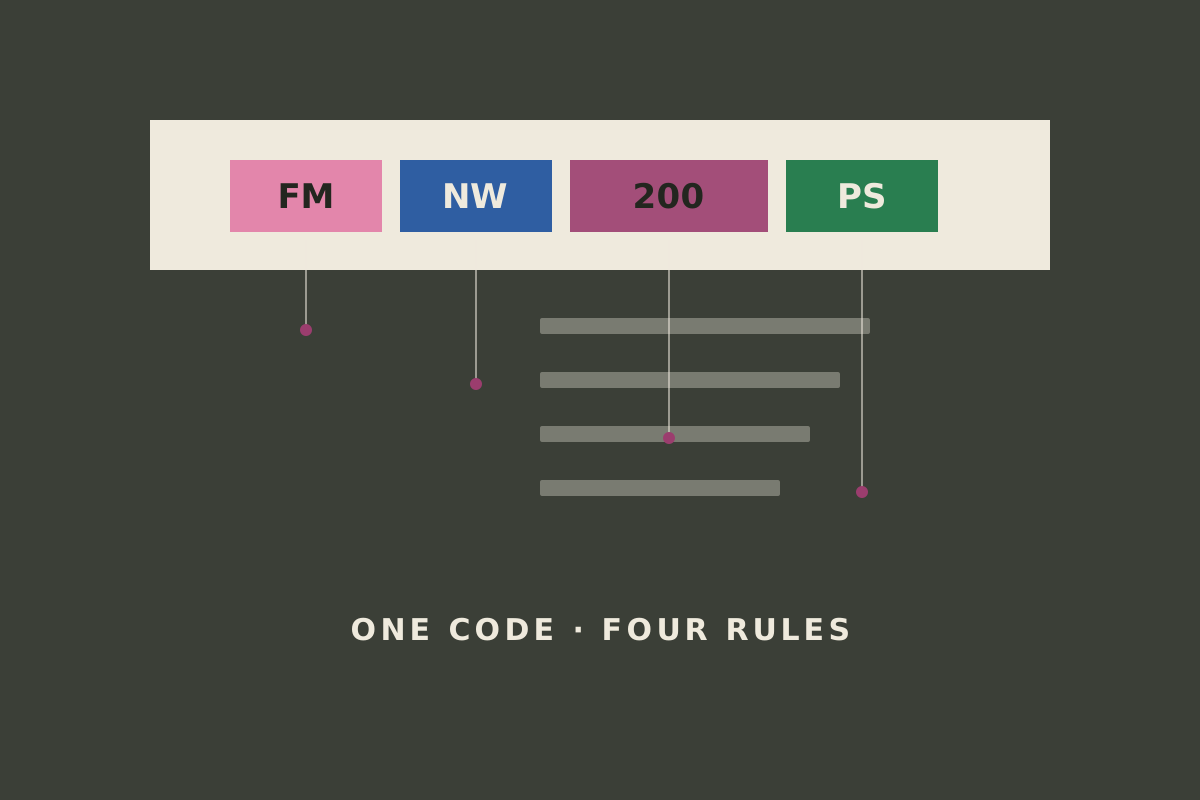
Four parts do most of the work. NW marks non-winners and sets a ceiling on money
already won. PS means that ceiling is an average per start rather than a total.
CL marks a claiming race, where any starter can be bought. FM
restricts the field to fillies and mares.
The codes below were pulled from the surviving Plainridge programs rather than from a rulebook, so the list
reflects what one racing office actually wrote over roughly fifteen seasons. Of the set, 135 break down cleanly into standard parts. The remaining 29 do not, and those are presented by observed usage instead.
Medication Letters
A separate column in the entry sheet carries a letter or two per horse. These are declared medications, filed with the office before the race rather than discovered afterwards, and they are printed in the program precisely so that anyone studying the field can weigh them up alongside the rest of the form.
Claiming
3000CL 56 races · $2,000–$3,000 → CLM 43 races · $1,800–$9,000 → 4000CL 42 races · $2,200–$4,000 → 3000CL OP 36 races · $1,800–$2,700 → 2000CL 33 races · $1,800–$3,000 → 5000CL 21 races · $2,500–$4,000 → 10000CLHC 19 races · $4,000–$7,000 → CLMHC 19 races · $2,000–$8,500 → 3000CLHC 18 races · $2,000–$3,000 → 5000CL OP 18 races · $2,400–$3,500 → 7500CL OP 17 races · $3,000–$4,300 → 7500CL 15 races · $4,000–$5,000 → 2500CL 14 races · $1,600–$4,000 → 4000CL OP 12 races · $2,200–$3,000 → 20000CLHC 10 races · $5,500–$9,000 → 15000CLHC 9 races · $5,500–$8,000 → 2000CLHC 9 races · $2,000–$2,500 → 10000CL OP 9 races · $4,000–$4,500 → 4000CLHC 8 races · $2,400–$3,500 → 8000CL 8 races · $4,000–$6,000 → 2000CL OP 8 races · $1,800–$2,200 → 20000CL 8 races · $7,000–$8,000 → 5000CLHC 7 races · $3,000–$4,500 → 6000CLHC 6 races · $3,500–$5,000 → 10000CL 6 races · $4,000–$7,500 → 12500CLHC 6 races · $5,500–$7,000 → 15000CL 5 races · $6,000–$7,500 → 2500CL OP 4 races · $1,800 → 1000CL 4 races · $1,800–$2,000 → 8000CLHC 3 races · $4,000–$4,500 → 6000CL 3 races · $3,600–$4,000 → 5000CLM 3 races · $3,000 → NW1000CL 3 races · $2,000 → 2500CLCD 2 races · $1,600 → CL 2 races · $2,300–$3,000 → 7500CLHC 2 races · $4,500–$5,000 → 25000CLHC 2 races · $8,000–$8,500 → 12500CL 2 races · $10,000 → 3000CLM 2 races · $2,000 → Non-winners
NW200PS 203 races · $1,800–$2,700 → NW2PMLT 85 races · $1,800–$2,500 → NW1PMLT 65 races · $1,500–$2,000 → NW300PS 63 races · $2,000–$3,000 → NW250PS 35 races · $1,800–$3,000 → NW350PS 34 races · $2,700–$3,700 → NW500PS 30 races · $3,000–$5,000 → NW400PS 27 races · $2,700–$4,000 → NW200PSL5 24 races · $1,800–$2,000 → NW3PMLT 21 races · $2,400–$3,000 → NW4PMLT 20 races · $2,400–$4,000 → NW1000CD 17 races · $2,000–$2,500 → NW150PS 15 races · $1,800–$2,700 → NW450PS 14 races · $3,000 → NW150PSCD 12 races · $1,600 → NW600PS 12 races · $3,500–$4,500 → NW800PS 11 races · $4,000 → NW200PSCD 10 races · $2,000 → NW5PMLT 9 races · $2,700–$4,000 → NW1500CD 9 races · $2,200–$2,600 → NW300PSCD 8 races · $2,500 → NW2PMLTCD 8 races · $1,500–$2,000 → NWCD 8 races · $1,800 → NW2000CD 8 races · $2,700–$3,000 → NW175PS 7 races · $1,800 → NW3000CD 7 races · $3,500–$3,600 → NW400PSCD 6 races · $3,000–$5,000 → NW6PMLT 6 races · $3,000–$3,300 → NW1PMLTCD 5 races · $1,500–$1,800 → NW1CD 5 races · $1,800–$2,000 → NW1000 4 races · $2,000–$2,200 → NW2000 4 races · $3,000–$3,500 → NW3000 4 races · $4,000 → NW1500 4 races · $2,200–$2,800 → NW300PSL5 4 races · $2,500 → NW750CD 4 races · $1,800 → NW2500 3 races · $3,500 → NW1500L6 3 races · $2,500 → NW1000L5 3 races · $2,000–$2,500 → NW1500L5 3 races · $2,500 → NW700PS 3 races · $7,000 → NW325PS 3 races · $2,500–$3,000 → NW2CD 3 races · $1,800–$2,500 → NW260PS 2 races · $2,300–$2,400 → CGNW1PMLT 2 races · $1,800–$2,500 → NW205PS 2 races · $1,800 → NW3000L6 2 races · $3,500 → NW305PS 2 races · $2,500 → NW200PS09 2 races · $2,000 → NW300PS09 2 races · $2,500 → NW450PS09 2 races · $3,000 → NW4000CD 2 races · $4,000–$4,500 → Fillies and mares
FMNW200PS 98 races · $1,800–$2,500 → FMNW300PS 32 races · $2,200–$3,000 → FMNPO 21 races · $2,700–$5,000 → FMNW250PS 13 races · $2,200–$2,600 → FMOPEN 12 races · $4,000–$7,000 → FMNW350PS 9 races · $3,000–$3,500 → FMNW450PS 8 races · $3,000–$3,500 → FMNW400PS 7 races · $3,000–$4,200 → FMNW1000CD 7 races · $2,000–$2,500 → FMCLM 6 races · $1,800–$2,600 → FMNW175PS 5 races · $1,800 → FM 5 races · $2,500–$5,000 → FMNW1500CD 5 races · $2,200–$2,500 → FMNW500PS 4 races · $4,000–$4,500 → FMNW1PMLT 4 races · $1,800–$2,500 → FMNW150PS 3 races · $1,800 → FM3000CLHC 3 races · $2,500–$3,000 → FMWO5000 3 races · $5,000 → FMCLMHC 3 races · $2,300–$2,800 → FMOPENHC 3 races · $4,500–$6,000 → FM3000CL 3 races · $2,000–$2,500 → FMNW1000CL 3 races · $2,000 → FMNW300PSC 2 races · $2,500–$3,000 → FMNW150PSC 2 races · $1,600 → FMWO2400 2 races · $5,000–$5,500 → FMNWCD 2 races · $1,800 → FMNW205PS 2 races · $1,800 → FMNW3PMLT 2 races · $2,500 → FM3000CLM 2 races · $2,000 → FMNW750CD 2 races · $1,800 → FMNW1CD 2 races · $2,000 → FMNW2000CD 2 races · $3,000 → Open and handicap
Other
QUA 53 races → AMATEUR 20 races · $1,800–$2,500 · usage only → W2-4PMLT 11 races · $2,400–$3,500 → WO10000 9 races · $5,000–$7,000 · usage only → BAYSTATE 9 races · $3,000–$6,000 · usage only → G&WITCHES 8 races · $1,600–$3,000 · usage only → 4YOS 7 races · $4,000–$5,000 · usage only → WO3000L6 6 races · $5,000–$6,000 · usage only → WO3000CD 6 races · $4,500–$7,000 · usage only → BILLINGS 6 races · $2,000–$3,000 · usage only → MASSBREDS 6 races · $2,500 · usage only → PATRIOT 5 races · $2,000–$3,000 · usage only → WO5000 4 races · $5,000 · usage only → WO2500L6 4 races · $5,000 · usage only → 3BY3 4 races · $3,000–$5,000 · usage only → GASBARRO 4 races · $2,500 · usage only → W4-6PMLT 4 races · $3,500–$4,000 → MASS 4 races · $21,200–$21,600 · usage only → WO2400L6 3 races · $4,500–$6,000 · usage only → W3-5PMLT 3 races · $3,000 → NPO 3 races · $3,000 · usage only → DEFENDER 3 races · $2,500–$4,000 · usage only → BUNKERHILL 3 races · $3,000–$4,000 · usage only → 3FORMONEY 3 races · $4,000–$5,000 → STARSEARCH 3 races · $4,000 · usage only → MIDSUMMER 3 races · $10,000 · usage only → LADYPAT 3 races · $2,000–$3,000 · usage only → PLAINVILLE 3 races · $1,800–$15,000 · usage only → W3-6PMLT 3 races · $3,000–$4,000 → W2-3PMLT 2 races · $2,400–$2,500 → W2-5PMLT 2 races · $3,000 → W2-5PMLTCD 2 races · $3,000 → 34THEMONEY 2 races · $3,000–$6,000 → YOUNGGUNS 2 races · $3,000 · usage only → BOYS 2 races · $5,000 · usage only → BECKWITH 2 races · $50,000 · usage only → SOLSTICE 2 races · $5,000 · usage only → BOYSSUMMER 2 races · $4,000 · usage only → BERGSTEIN 2 races · $10,000–$27,700 · usage only → How the Code Set Behaves as a Whole
164 codes appear in this glossary, 144 of them written conditions and 20 named races. Between them they account for 1,884 appearances across the surviving programs, and even the least used of them still turns up twice, so nothing in the list is a one-off to be discounted as a typing error.
Usage is very uneven. The median code appears five times, while NW200PS on its own accounts for 203 of those appearances. A handful of conditions carried most of the meeting, and the long tail beneath them is where the unusual cards and the occasional named event actually turn out to sit.
164 of the codes turn on money rather than on wins, and a purse range survives for 163 of them. That pairing is what makes the list readable as a ladder: the code says what a horse had to be, and the purse attached to it says roughly where that placed the race on a card.
Questions About Class Codes
What is a class code in a harness racing program?
It is the racing secretary's shorthand for who was eligible to enter a race. Rather than grading horses with an official rating, the office writes an eligibility sentence and compresses it into a code, then lets the entries sort themselves out against that condition rather than against a published rating for each horse.
What does NW mean?
Non-winners. It sets a ceiling on how much a horse may already have won and still remain eligible for the race. It is the most common building block in the whole system, and it is almost always followed by a money figure stating exactly where that ceiling has been set for the race.
What is the difference between PS and PMLT?
They measure money two different ways. PS means per start, so the ceiling is an average across each of the horse's starts. PMLT means pari-mutuel lifetime, counted across every betting race the horse has ever contested, which is a very much longer window and therefore a stricter test of a horse than a single season would be.
What does CL mean in a class code?
Claiming. Every starter in the race is for sale at the stated price, and any eligible owner may buy one shortly after it runs. The figure printed alongside is that price, and it can vary between horses in the same field, with weight or purse allowances applied to even out the difference.
What does FM in front of a code do?
It restricts the race to fillies and mares, so no horses or geldings may enter. It sits at the front of an otherwise ordinary condition, which is why the same eligibility rule often appears twice on one card, once open to all and once restricted to females.
Why are some codes here left without a meaning?
Because their parts do not map onto the standard abbreviations with enough confidence to spell out a full reading. Rather than invent an explanation, those pages state how the code was actually used instead, giving the gaits, the purse range and the dates on which it was carded.